Dark beers are beers brewed with a share of heavily kilned or roasted malt, which gives them colors from deep brown to black and flavors that lean toward coffee, chocolate and toast. Stouts and porters are the best-known examples, and as fall evenings cool off from Farmington to Las Cruces, more of them start showing up on New Mexico tap lists.
They also come with one of the most common surprises in beer: a stout is an ale. Here is why, what actually makes a beer dark, and two New Mexico stouts worth looking for this season.
Why dark beers show up when the weather turns
Part of it is food. Fall and winter in New Mexico mean green chile stew, posole, red chile and anything that comes out of an oven. Roasted malt flavors sit naturally next to that kind of cooking, the same way a crisp pilsner suits a hot August afternoon.
Part of it is pace. A rich, roasty beer invites slow sipping, and the stronger versions, like imperial stouts, are often poured in smaller glasses. Breweries know the rhythm too: lighter beers tend to lead in summer, and darker seasonals tend to arrive as the weather cools.
One thing worth knowing before you order: dark does not mean heavy or strong. The Beer Judge Certification Program (BJCP), which publishes the style guidelines used to judge beer competitions, puts a classic Irish stout at just 3.8% to 5% alcohol by volume (ABV). That is lighter than many IPAs. Color tells you about the malt, not the strength.
Is a stout an ale?
Yes. A stout is an ale because it is fermented with ale yeast, the warm-fermenting, “top-fermenting” yeast also used for pale ales, IPAs and wheat beers. Porters are ales for the same reason. Whether a beer is an ale or a lager depends on the yeast, not on its color, its strength or how heavy it feels.
Ale vs. lager: it comes down to yeast
Yeast is the single-celled organism that eats the sugar in unfermented beer and turns it into alcohol and carbon dioxide. Brewers sort beer into two big families based on which kind does that work. According to the American Homebrewers Association:
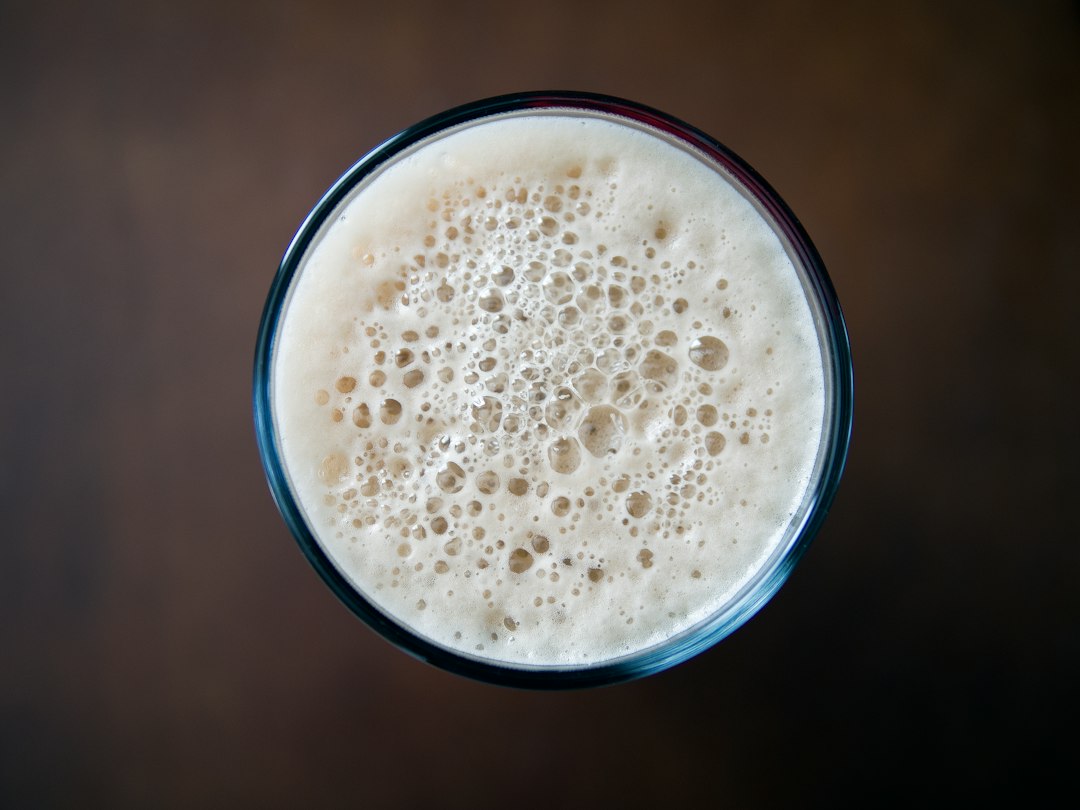
- Ales use Saccharomyces cerevisiae. It is called top-fermenting because most of the visible activity happens at the surface, where the yeast forms a foamy layer. Ale yeast works at roughly 60 to 78°F.
- Lagers use Saccharomyces pastorianus, a hybrid yeast that tolerates cold. It is called bottom-fermenting because it shows little activity at the surface. It works at roughly 48 to 58°F, and the beer is then conditioned near freezing for weeks. That cold storage is “lagering,” from the German word for storing.
The temperature difference shows up in flavor. Warmer ale fermentations can produce esters, flavor compounds made by yeast that often read as fruit, while cold lager fermentations tend to taste cleaner. In a stout, that ale character usually sits quietly behind the roast.
The line has some fun exceptions. Kölsch and altbier are made with ale yeast at cool, almost lager-like temperatures, and California common uses a lager strain at warmer, ale-like temperatures.
What makes a beer dark
Color comes from malt, which is grain (usually barley) that has been soaked, allowed to sprout, and then dried with heat. Pale malts are dried gently. The darker specialty malts, such as chocolate malt, black malt and roasted barley, are roasted at much higher temperatures. According to Brew Your Own, two browning reactions do the work: the Maillard reaction, the same one that browns toast and seared meat, and caramelization of the grain’s sugars.
A brewer does not need much of these roasted grains. A small share of the recipe, built on a base of pale malt, is enough to turn a beer black and give it those coffee and cocoa notes.
Brewers measure color on the SRM scale (Standard Reference Method), where a higher number means a darker beer. The BJCP lists Irish stout at 25 to 40 SRM, described as jet black to deep brown and opaque.
And dark beer is not only an ale story. Schwarzbier, German for “black beer,” is a lager made with dark malts. The BJCP puts it at 19 to 30 SRM and 4.4% to 5.4% ABV, with a smoother, lighter roast than a porter or stout. Same dark color, different yeast.
Stout vs. porter
Porter came first, as a popular dark beer in 18th-century London. Stronger versions were sold as “stout porter,” and the name eventually shortened to stout. The BJCP notes that Guinness brewed only porter until 1799 before shifting toward the stronger, darker beers that became Irish stout.
Today the line between them is blurry, and brewers often choose the name their own tradition suggests. As a rough guide, the BJCP describes Irish stout as black and English porter as brown, and roasted barley is closely associated with stouts. Porters usually lean a little more toward chocolate and caramel, stouts a little more toward coffee and roast.
Two New Mexico stouts to look for
La Cumbre Malpais Stout, Albuquerque
La Cumbre Brewing Co. lists Malpais Stout among its year-round beers and calls it the most intense of them. The brewery describes it as a rich, full-bodied Foreign Extra Stout brewed with seven malts, at 7.5% ABV. Foreign Extra Stout is a stronger stout style that grew out of beers brewed for export. Untappd lists it at 60 IBU (International Bitterness Units, a measure of hop bitterness), rated 3.9 by more than 14,000 Untappd users.
Second Street Cream Stout, Santa Fe
For a gentler take, Second Street Brewery pours a Cream Stout it describes as inspired by sweeter, fuller-bodied English stouts. The brewery lists it at 5.2% ABV and 23 IBU, with chocolate, caramel and roasted notes balanced by English Fuggle hops, and suggests it alongside dessert. Next to Malpais, it is a good way to see how wide the stout family runs.
Tap lists change with the seasons, so check with the brewery before you make the drive.
How to explore dark beers this season
- Start lighter. A porter or a dry Irish-style stout shows off roasted malt without much alcohol.
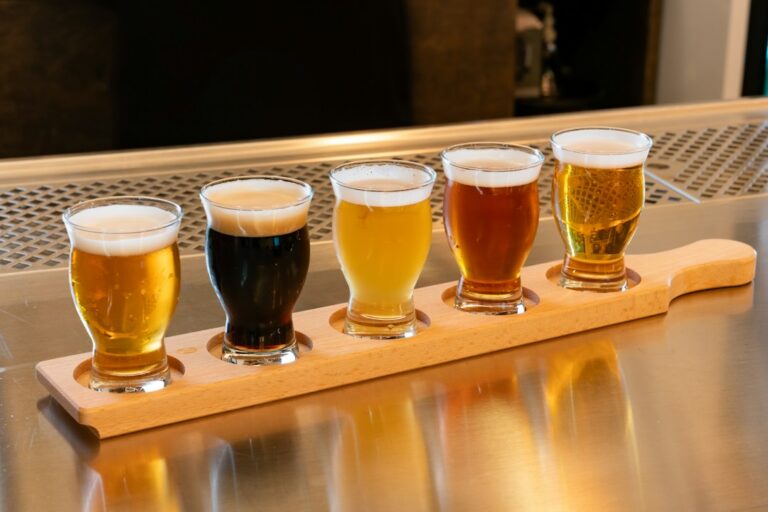
- Compare side by side. A stout next to a dark lager makes the ale-versus-lager difference easy to notice.
- Bring food into it. Roasted malt pairs well with stews, smoked meats and chocolate desserts.
- Read the style name. “Imperial,” “export” and “extra” usually signal a stronger beer. Sweet, milk and cream stouts lean softer.
If you are visiting a few taprooms in one outing, line up a designated driver or a rideshare and make an evening of it.
Cold nights are a good excuse to try something darker than usual. Browse the New Mexico brewery directory and map on New Mexico Breweries to find a taproom near you, see what each brewery is pouring, and pick out a stout or porter to try this fall.
Beer details from the breweries and Untappd.